Food security stocks and the potential collapse of the Bali Agreement

Food security stocks and the potential collapse of the Bali Agreement

After several days of work, and the usual posturing and drama, Members of the WTO closed the Ninth Ministerial Conference on December 7 2013 with an agreement on the first comprehensive multilateral trade package negotiated within that organization. The Bali agreement has been part of the process initiated by the Doha Round launched in Doha, … Read more

Time for an Asian Infrastructure Investment Bank

Time for an Asian Infrastructure Investment Bank

The proposed Asian infrastructure bank could galvanize growth in emerging Asia and boost lingering global recovery. According to Western media, the Asian Infrastructure Investment Bank (AIIB) is to rival the World Bank and the Asian Development Bank (ADB). In reality, the idea of the AIIB was put forward more than a year ago; not to … Read more

Five Reasons Not to Fear Deflation: Which Ones Make Sense?

Five Reasons Not to Fear Deflation: Which Ones Make Sense?

In a post earlier this week, I explained why a majority of economists fear deflation. They argue that deflation disrupts the operation of financial markets and labor markets in a way that risks touching off a downward spiral. At the same time, they say, deflation weakens the power of monetary policy to reverse the downward … Read more

Why Should Europe (or Anyone Else) Fear Deflation?

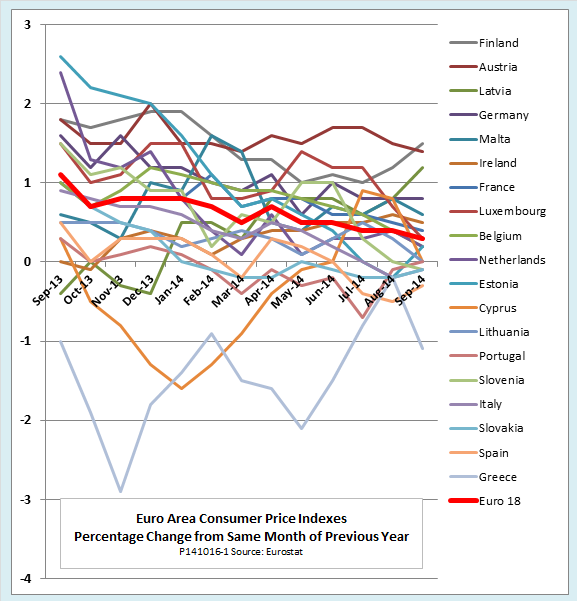
This is the first of a two-part series on deflation, which continues with “Five Reasons Not to Fear Inflation: Which Ones Make Sense?” This additional post updates the euro deflation story through December 2014 and discusses the impact of oil prices on deflation in Europe. Europe is fearful as it teeters on the brink of … Read more

Eurocrisis Round Two, Blame the Germans Edition

Eurocrisis Round Two, Blame the Germans Edition

“What strikes me, also, is the extent of intellectual confusion that remains.” – Paul Krugman, Europanic 2.0 “The problem is that Germany has continued to maintain highly competitive labor costs and run huge surpluses since the bubble burst — and that in a depressed world economy, this makes Germany a significant part of the problem.” … Read more

International Debt and Financial Crises

International Debt and Financial Crises

The latest issue of the IMF’s World Economic Outlook has a chapter on global imbalances that discusses the evolution of net foreign assets (also known as the net international investment position) in debtor and creditor nations. The authors warn that increases in the foreign holdings of domestic liabilities can raise the probability of different types of financial crises, including … Read more

Is Japan Back In Recession?

Is Japan Back In Recession?

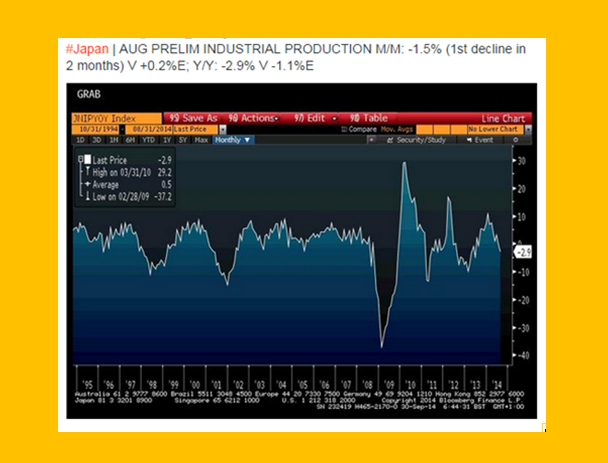
“People should seriously consider that Japan’s economy may have fallen into recession despite the weaker yen and a stock rally from the BOJ’s easing and the flexible fiscal policy by Abe’s administration,” said Maiko Noguchi, senior economist at Daiwa Securities. “Initial expectations that the economy could withstand the negative effects of a sales tax hike … Read more

The Economic Future (if Any) of “Novorossiya”

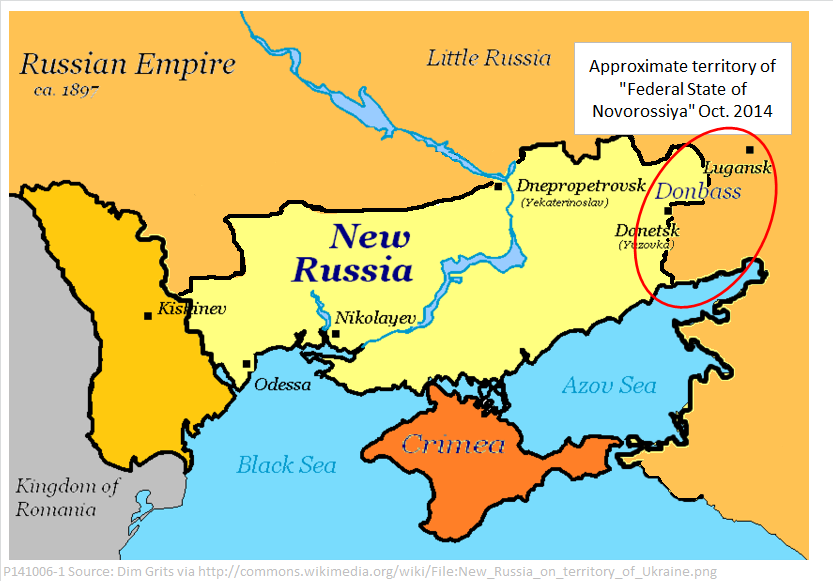
Last May, I posted an item on the economic situation in the rebellious regions of Eastern Ukraine, or “Novorossiya” (New Russia), to use the term increasingly favored by separatists and  their Russian sponsors. Novorossiya was the name of a province of Tsarist Russia that occupied much of the southern part of present-day Ukraine, stretching all … Read more