Is Germany Übercompetitive and Should it Accept Higher Inflation?
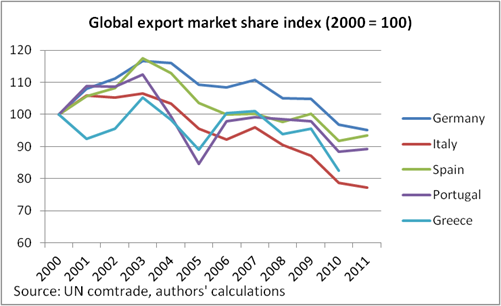
The intra-Eurozone current account deficits have frequently been mentioned as one of the causes of the current malaise in the euro area. Krugman (2012(1)) has stated that the current crisis is “a balance of payments problem, in which capital flooded south after the creation of the euro, leading to overvaluation in southern Europe”. Dadush and … Read more

Europe’s Case Against Gazprom Will Damage Russian Influence

Europe’s Case Against Gazprom Will Damage Russian Influence

By Nick Cunningham: As Russian President Vladimir Putin tries to maintain its grip over Eastern Europe with its vast web of natural gas pipelines, one small European country gained a bit of leverage over Russia. Lithuania announced on May 8 that it has successfully pressured Russian gas giant Gazprom into lowering its price for natural … Read more

Russia Claims Ukraine’s Black Sea Oil And Gas Bounty

Russia Claims Ukraine’s Black Sea Oil And Gas Bounty

Russia’s annexation of Crimea has totally upended Kiev’s plans for Black Sea and Sea of Azov offshore oil and natural gas production. Before the peninsula’s March 16 independence referendum, followed two days later by Russian annexation, Ukraine’s state-owned Chornomornaftogaz (“Chernomorneftegaz” in Russian) owned 17 hydrocarbon fields, including 11 natural gas fields, four gas condensate fields, and two … Read more

Cash Exiting China

Cash Exiting China

Something that I have thinking about for a few weeks – and was reminded of reading Ryan Avent this morning – is the series of pieces at FT alphaville regarding the outflow of cash from China.  See here and here and here.  The thinking had been that the renminbi was a one-way bet as China … Read more

Why the Fed is Flummoxed by the U.S. Labor Market:

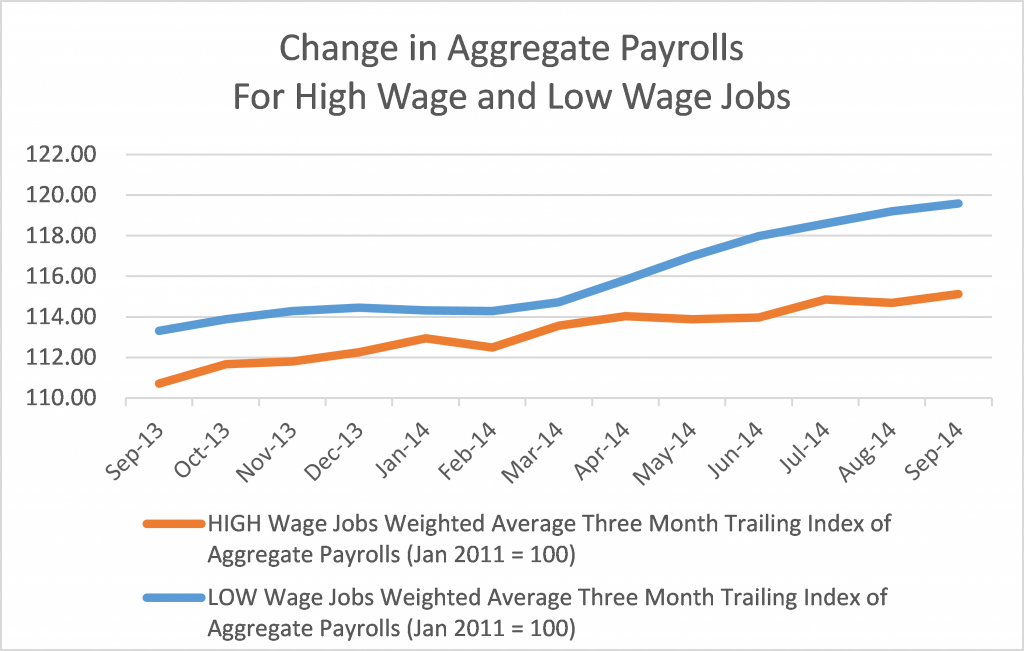
A New Analysis of Employment in the Era of Secular Stagnation and Global Oversupply U.S. Jobs in 2014―A New Conundrum   Source: Bureau of Labor Statistics and author’s re-indexation. Aggregate payroll growth in 2014 has been concentrated in low wage sectors and, for reasons discussed in this report, is not transmitting effectively to consumption growth … Read more

To the G-20: It Is Demand Deficiency, Not Supply

To the G-20: It Is Demand Deficiency, Not Supply

The Eurozone countries and Japan are now falling back into recession/depression and deflation, and their public debt levels are grossly excessive, and still rising. The deepening economic crisis in these two large economic blocks could have serious implications for other G-20 countries, as aggregate demand is already weak globally. Nonetheless, based on the advice of … Read more

Liquidity Glut, Infrastructure Finance Drought and Development Banks

The world economy faces huge infrastructure financing needs that are not being matched on the supply side. Emerging market economies, in particular, have had to deal with international long-term private debt financing options that are less supportive of infrastructure finance. While unconventional monetary policies in advanced countries in the aftermath of the global financial crisis … Read more

What Quantitative Easing Did Not Do: Three Revealing Charts

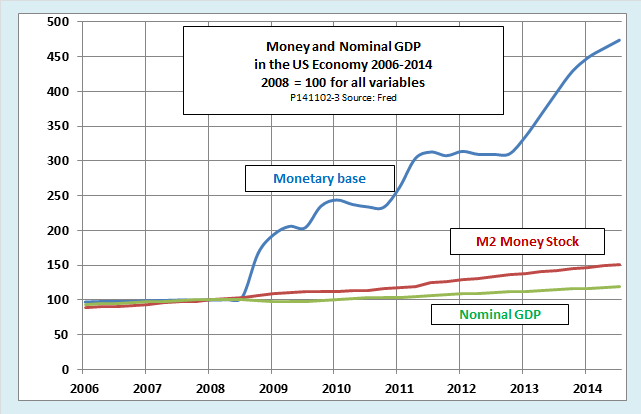
The Fed has declared an official end to quantitative easing. It is a logical time to ask, did QE work? Danielle Kurtzleben gives the honest answer in a recent post on Vox: “It’s very, very hard to know.” Still, we do know three things that QE did not do. These are worth pointing out, especially … Read more