
The US monetary policy is the Federal Reserve’s actions and communications to achieve the economic goals set by Congress. Some of those goals include maximum employment, moderate long-term interest rates, and stable prices. The US monetary policy significantly impacts the global economies mainly through the ‘global financial cycle’.
Changes in the US interest rates influence capital flows, exchange rates, and financial conditions worldwide, which leads to ripple effects in several other countries. This mostly affects emerging markets and causes economic instability in those regions depending on their vulnerability and external shocks. When the US raises interest rates, it results in drawing capital away from other countries, which tightens their financial conditions and slows down their economic growth.
This article will shed light on the Impact of US monetary policy on global economies, how and why it happens, and how to tackle it. So, keep reading to learn more.
What are the impacts of US monetary policy on global economies
Since the US is the world’s largest economy its monetary policy has a significant effect on global economies. It has a great role in global trade and the financial market. There are several reasons why the US monetary policy affects the global economy including:
Interest Rates
Interest rates significantly affect the global economy because when the US interest rates increase, it negatively impacts the global economy. This happens because higher interest rates reduce demand for both US and foreign goods. Higher interest rates lead to a stronger dollar, making foreign goods cheaper compared to US goods and it also increases the debt service burden for borrowing countries, which makes it harder to repay the loans.
Financial Markets
Uncertainty about the US monetary policy leads to fluctuations in global financial markets. Since financial markets provide capital, participation, and liquidity, they are essential for economic growth and stability. They pave the way for new businesses, employment, and better efficiency by allowing individuals, governments, and businesses to invest, borrow, and raise capital.
Capital Flows
Capital flows are affected by US monetary policies, for example, if the US monetary tightens, it can lead to the reversal of capital flows. This increases the risk of banking crises. However, the globalization of economies and the emergence of developing economies resulted in increased capital flows, such as Foreign Direct Investment (FDI). This increased the pressure on international organizations to reduce the risk of capital flight and volatility.
Emerging Markets
The US monetary policies have more impact on emerging markets than on developed markets. Emerging markets are a key part of the global economy because they affect the global economy in many ways, including growth, sustainability, population, economic improvement, and supply chains. Emerging markets are expected to contribute around 65% of the global growth by 2035 and they are becoming more important in global supply chains because of trade fragmentation and post-pandemic diversification. Also, emerging markets are believed to lift people out of poverty and improve their standard of living.
Why US Monetary Policy Matters: Critical Economic Impacts
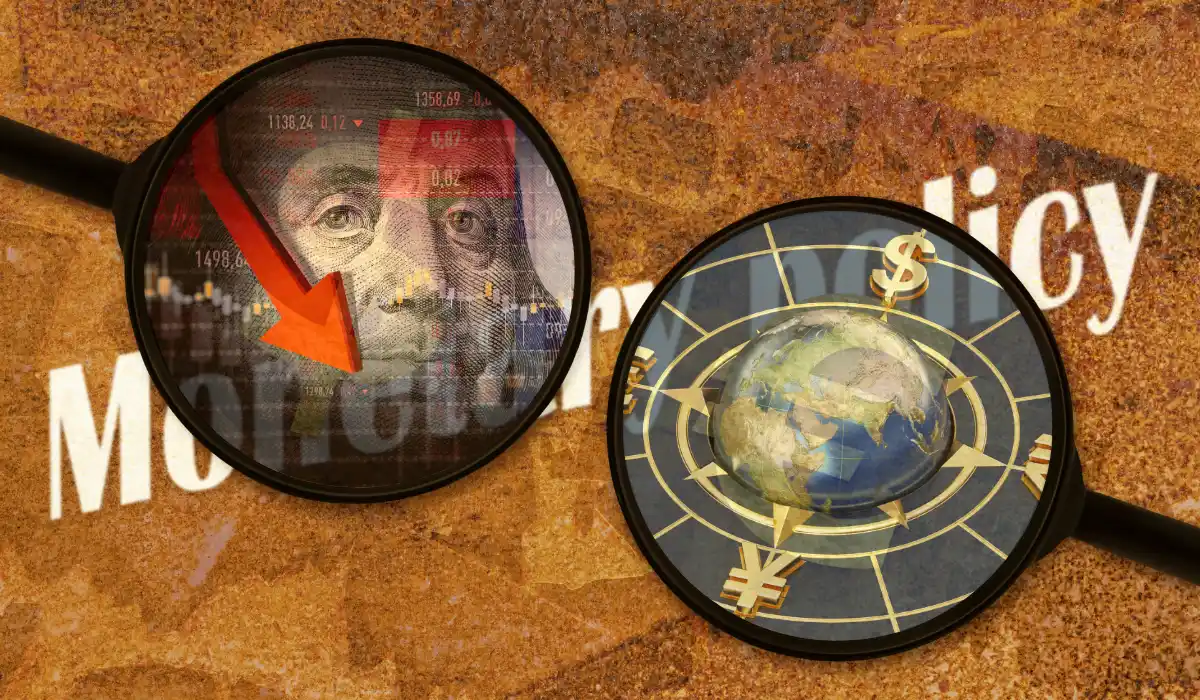
US monetary policy impacts the global economy in many ways, mainly because of capital flows. When US monetary policy changes, it affects the relative return on investment in other countries. When US rates increase, it leads to an increase in debt service burdens in borrowing countries and reduces investors’ appetite for risk, which reduces their exposure to risky markets. Also, when the US demand is lower, it causes a contraction in oil and commodity prices, which is reflected in energy prices abroad.
Some of the key mechanisms through which the US monetary affects global economies include the exchange rate channel, capital flow channel, and financial market channel. Some countries are more vulnerable to US monetary policy changes mainly because they rely on foreign capital and potential debt burdens in dollars. A tightening US monetary policy causes several negative effects as it leads to currency depreciation, higher borrowing costs, and economic slowdowns in these economies.
While US monetary policies have less direct impact than emerging markets, developed economies still experience fluctuations in their capital flows and exchange rates. Some of the important considerations regarding US monetary policy include the role of the US dollar as the global reserve currency and country-specific vulnerabilities.
US monetary policy has a particularly strong influence on international financial markets and its impact will vary depending on a country’s economic fundamentals, level of debt, and exposure to the US dollar. Also, the global financial cycle and policy coordination are other things to consider regarding US monetary policy. The connection of global financial markets highlights the impact of US monetary policy decisions and the international cooperation among central banks helps mitigate negative spillover effects from the US monetary policy.
The Federal Reserve conducts monetary policy and sets a range for the federal funds rate, which explains the interest rate at which banks can borrow and lend to each other overnight. It is to be noted that the federal funds rate is not directly affected by most households and firms in the economy but is transmitted to the broader economy by affecting financial conditions more generally. This includes long-term interest rates at which the businesses or households borrow and exchange the value of the dollar. These factors make it important to assess how the broader financial conditions are affected by Federal Reserve monetary policy decisions.
However, such assessments will require an assumption about the evolution of monetary policy. So, to fully assess the outlook of the economy and monetary prospects, one must have an estimate of how the monetary policy works. The main impact of global economies includes reduced GDP, increased debt service burdens, a stronger dollar, global spillovers, and reduced capital flows. The monetary policy affects the availability and cost of credit in the economy.
Conclusion
The Federal Reserve and other monetary authorities have undertaken a tightening that has taken interest rates to their highest levels. The speed and magnitude of rate hikes resulted in more restrictions than needing to bring inflation back to target. This can cause a greater reduction in economic activity than necessary. The global economy has a great impact because of monetary tightening, an amplification that the central bank failed to factor into their rate decisions.
The US monetary policy is the Federal Reserve’s actions and communications to achieve the economic goals set by Congress, which has several impacts on the global economy. It mostly affects emerging markets and causes economic instability in some regions. When the US raises interest rates, it results in tightening of financial conditions, leading to the slowdown of economic growth. Some of the reasons why the US monetary policy affects the global economy include interest rates, financial markets, capital flows, and emerging markets.